
A retractable pergola roof is any roof that gets out of the way when you have stopped wanting it there. In British gardens that almost always means a louvred aluminium roof, where the blades rotate open for sun and close into a rain-tight surface. The alternative is a folding fabric roof that concertinas back along a track. This guide compares every roof type honestly, including the ones we do not sell and the one we would talk you out of.
What "retractable" actually means
The word gets thrown around so loosely that shopping for one is genuinely confusing. Three completely different mechanisms are all sold as retractable:
- Louvred. Aluminium blades rotate on their axis. Open to the sky, angled for shade, or closed and sealed. The roof never actually goes anywhere. It just changes its mind about being a roof.
- Folding fabric. A fabric canopy concertinas back along runners, leaving an open frame and a neat stack at one end.
- Sliding panels. Solid or glass panels slide over one another. Rare in gardens, common on commercial terraces where somebody else is paying.
Louvred has become the default in this country for one reason: it is the only one of the three that gives you a genuinely sealed roof and a genuinely open one, from the same structure, in about thirty seconds and without anybody getting on a ladder.
Louvred aluminium roofs
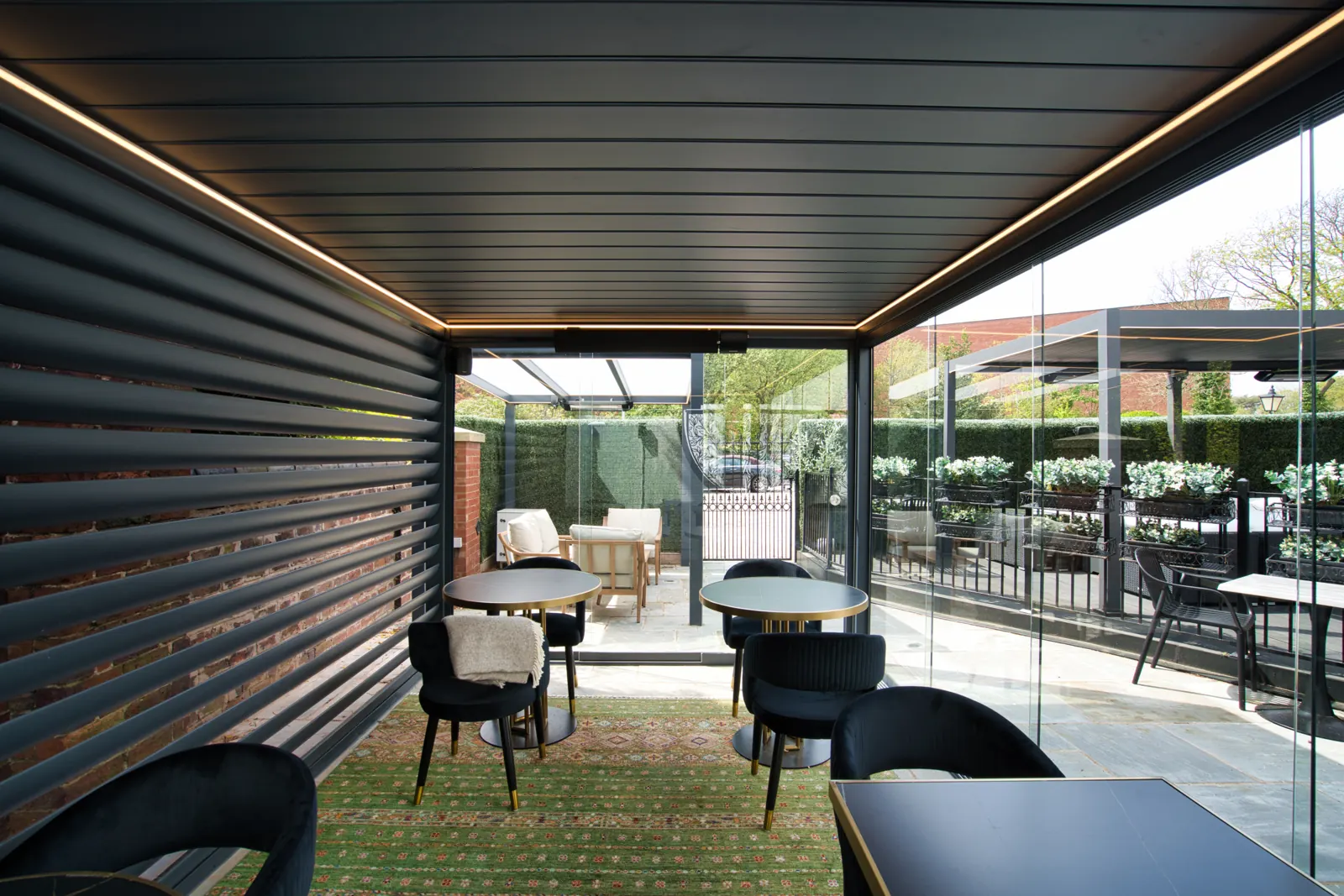
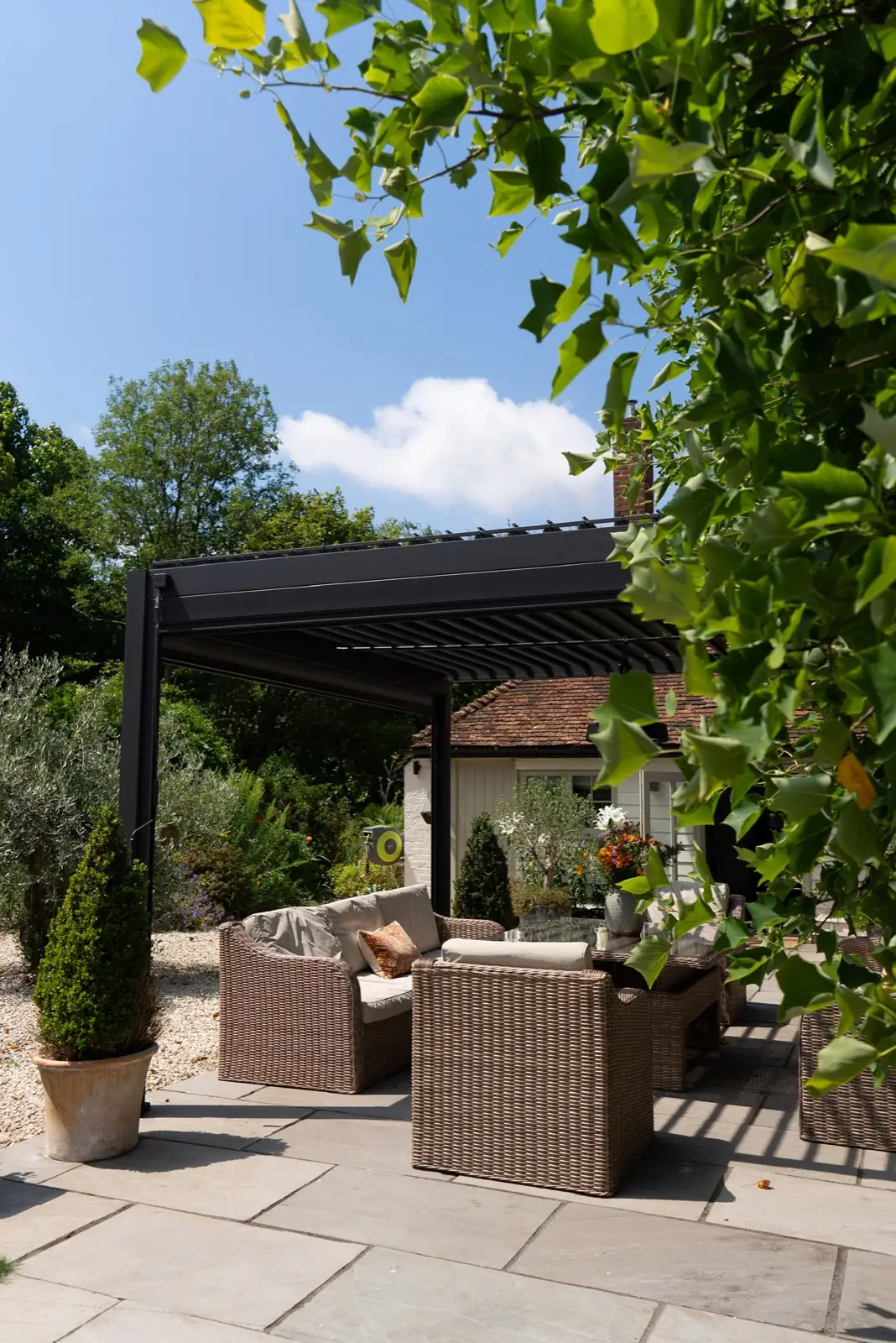
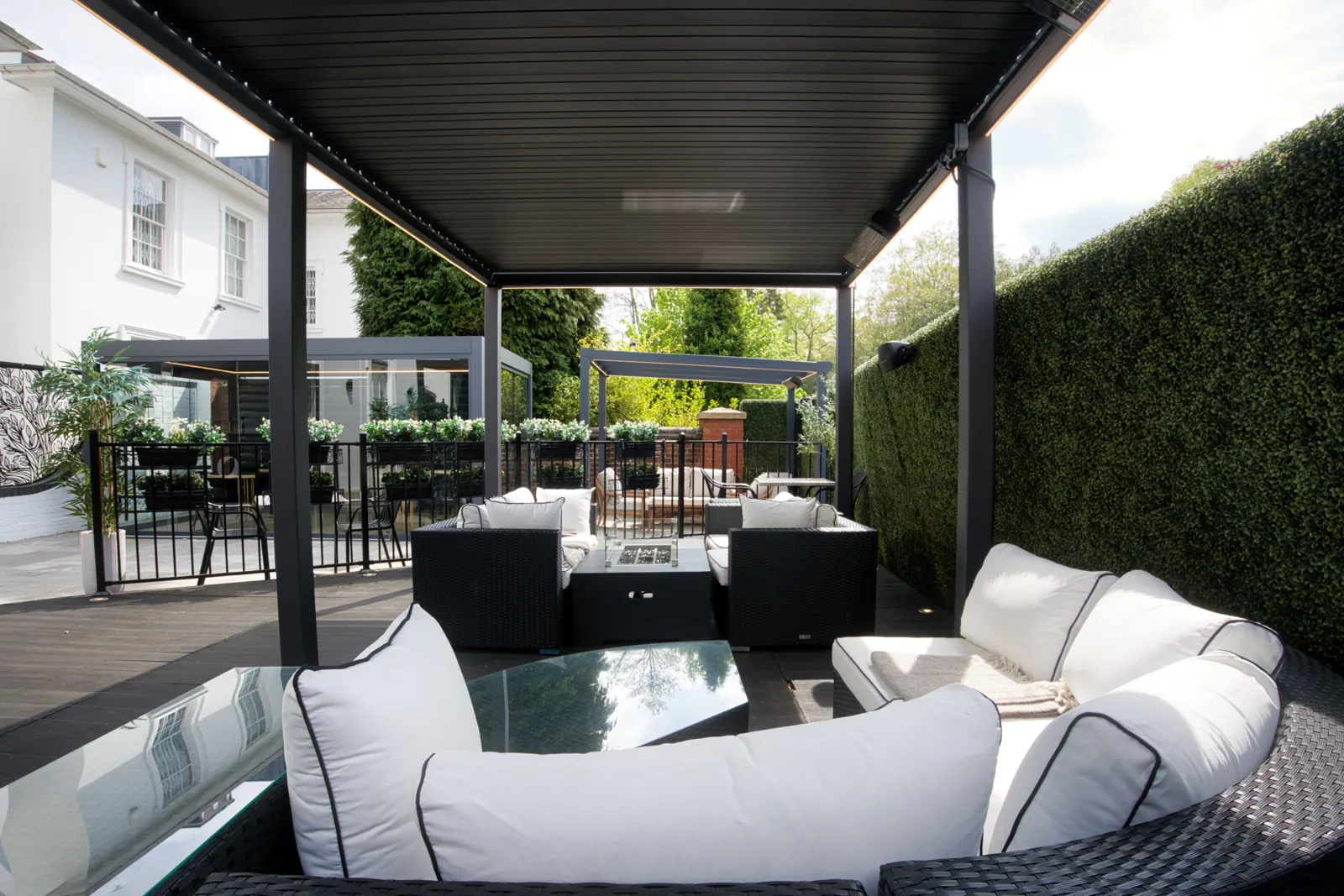
Rotating blades that open for sun, angle for shade, and interlock into a rain-tight surface draining through gutters hidden inside the posts.
This is the roof we would point most people at, and here is the honest reason. A traditional slatted timber pergola gets used a few weekends a year, because the instant it rains you are back indoors looking at it through a window. A louvred roof gets used most of the year, because the weather stops being the thing that decides your plans.
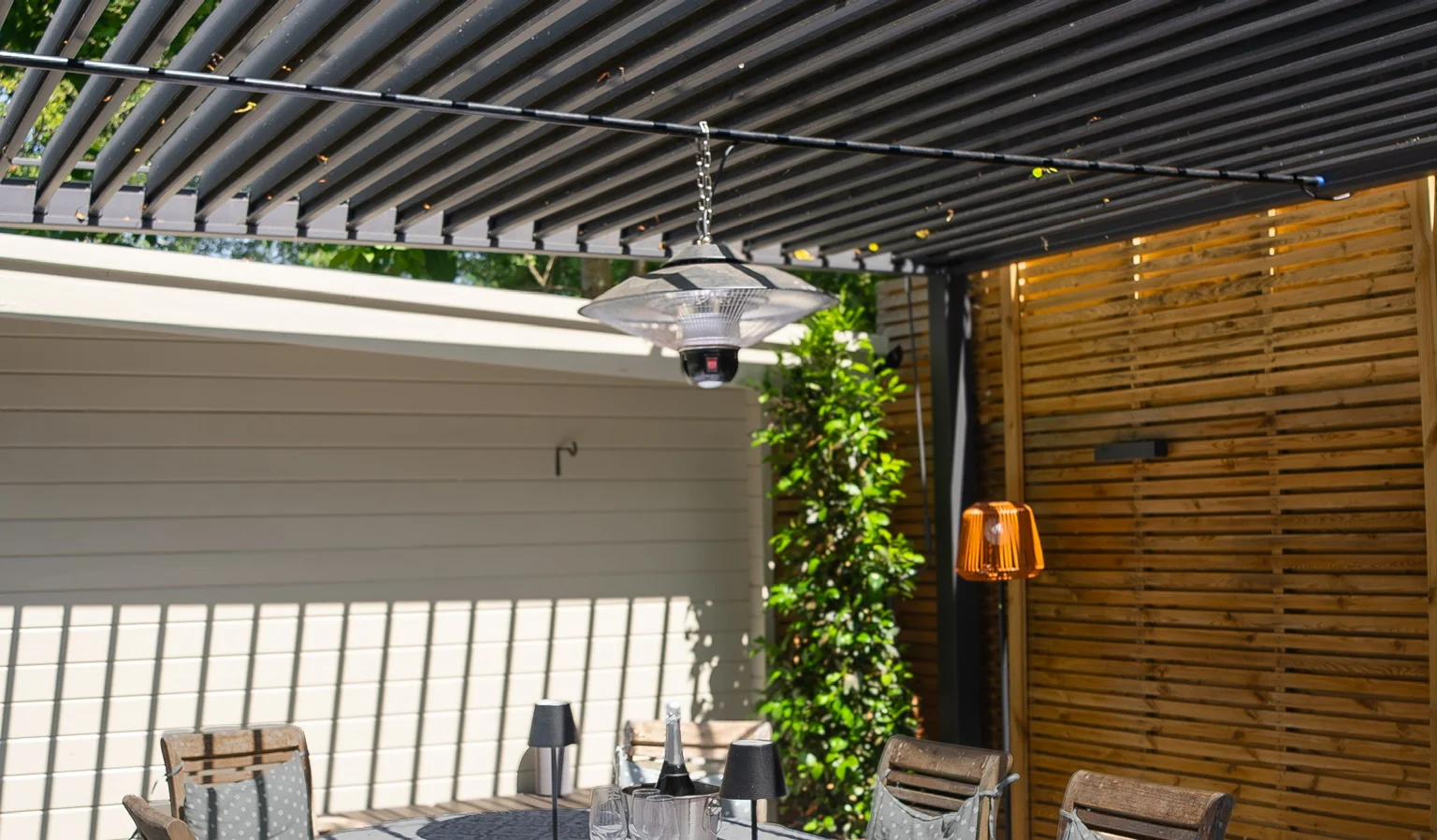
Within the type, the only real question is how it moves. Motorised systems respond to a remote or a wall switch, and the higher-spec ranges add rain sensors that shut the roof by themselves while you are at work, which is the closest a garden gets to having staff. Manual crank systems cost less and never need a power supply. Because the frame is engineered to carry extras, LED lighting and infrared heating mount inside it rather than being clamped on afterwards like an afterthought, which is exactly what they look like when they are.
The full case is on our louvered roof installation page. The motorised end of the range is the Morvelle, which carries a 10-year structural guarantee. The manual crank version is the British-made Titan.
Folding fabric roofs
A fabric canopy on runners that folds back to leave the frame open. Cheaper than louvres, and the fully-open position is properly open, with nothing overhead at all rather than a set of blades standing politely on edge.
Now the counter-argument, which we will give you unprompted because you are going to find it out anyway. It is fabric, in Britain. It sheds rain rather than sealing against it, standing water is something you have to actively think about, and the fabric is a wear item in a way that aluminium blades simply are not. On the right structure it is genuinely good value, and folding roof pergolas covers where that is. Just do not buy one expecting louvred-roof performance and then feel let down by physics.
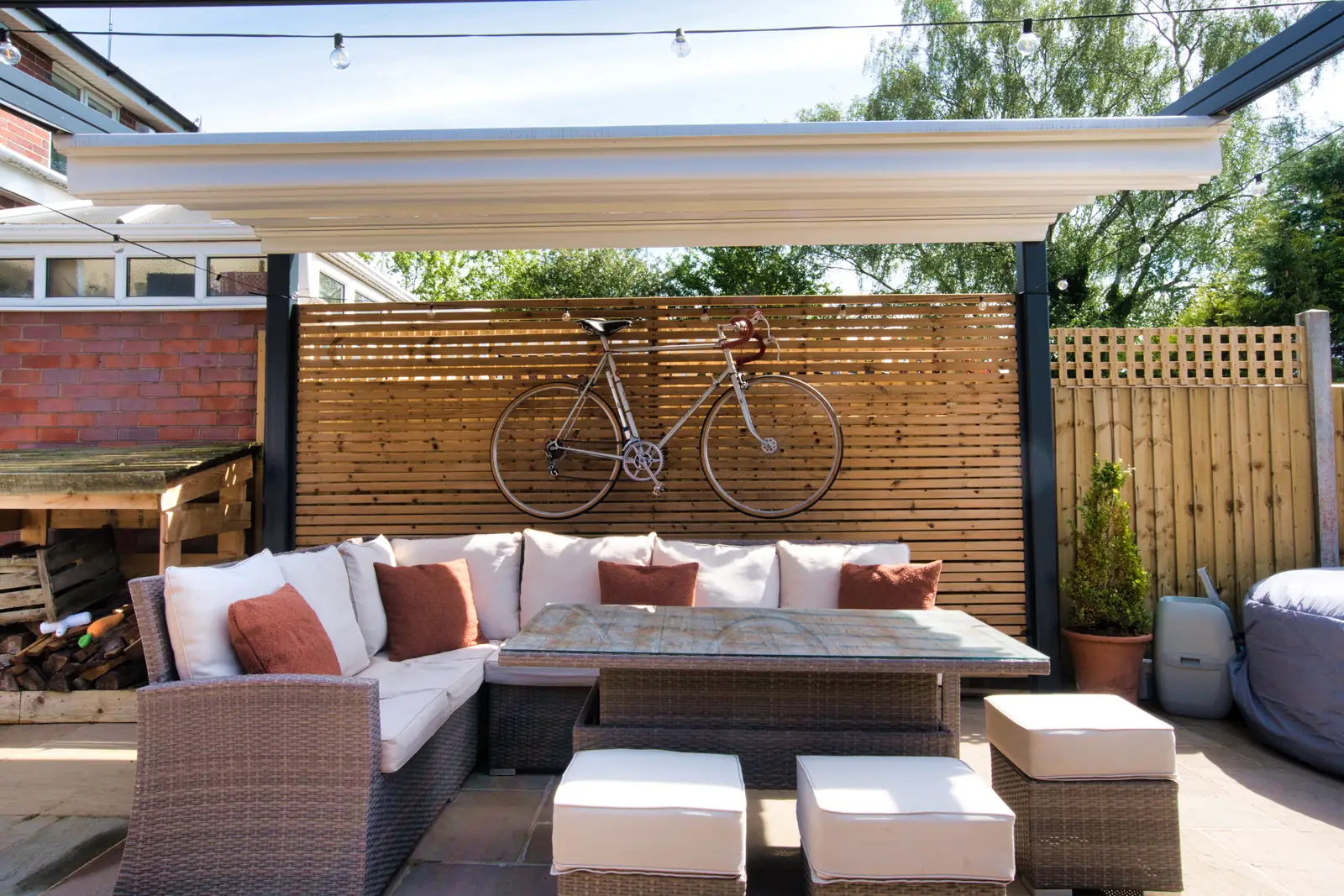
Glass and polycarbonate
Fixed, translucent, and not retractable in the slightest. Worth including because a good number of people arrive asking for a retractable roof and actually want this one.
If your problem is rain rather than sun, and the room behind the patio is already starved of light, a glass roof is the better answer by a distance. It keeps the light, keeps the rain off, and has no mechanism to maintain, service or explain to anybody. Glass looks better and lasts longer. Polycarbonate costs less and diffuses glare instead of directing it at your face.
The catch is that the shade is permanent, and a south-facing glass roof does a very convincing greenhouse impression in July. Plan the ventilation or the shading at the survey rather than in the first heatwave. This is the natural roof for an aluminium veranda.
Solid roofs
A fixed, insulated aluminium roof. Maximum weather protection, zero flexibility, permanent shade, and a room behind it that has quietly lost some daylight.
Solid roofs suit dedicated outdoor kitchens and hot tub shelters, where shade is the entire point and nobody is hoping for sun. The insulated versions have one genuinely underrated quality: in heavy rain they sound like weather rather than a drum solo. For a general-purpose patio they still give up too much, because the one thing a solid roof can never do is get out of the way in June.
Motorised or manual
Motorised buys you three things: convenience, rain sensors, and the integrated lighting and heating that runs off the same system. Manual crank buys you a lower price and complete independence from the electricity supply.
The practical test is distance, and it is worth being unsentimental about it. If the pergola is attached to the house, manual is absolutely fine, because you are ten steps away and mildly annoyed at worst. If it is at the bottom of the garden, ask yourself honestly whether you will walk down there in the rain to close it. Most people will not, and a roof that never gets closed is just an expensive frame.
Waterproofing and drainage
This is where build quality announces itself, and where the cheap systems come apart. Usually mid-meal.
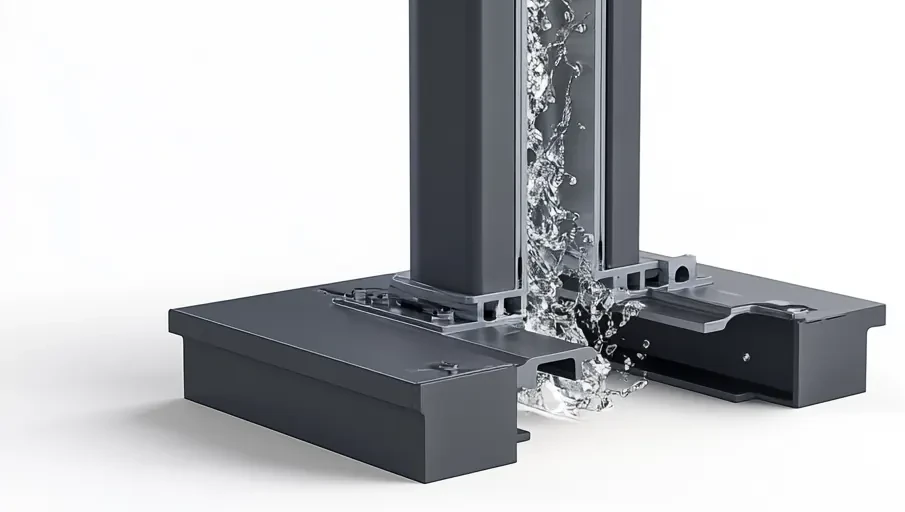
On a good louvred roof, closed blades interlock into one continuous surface, and the water runs into gutters concealed inside the frame, down through the hollow posts, and out at the base. The cutaway above is the whole idea in one picture: the drainage is inside the structure. You should not be able to see it at all. If a system's rainwater management is visible, or bolted to the outside, or described in the brochure as "innovative", that is telling you something.
It is also why the structural guarantee matters more than the colour chart. Our frames are BS EN1090 accredited, and the Morvelle range carries a 10-year structural guarantee, which is worth holding up against whatever else you are quoted. The mechanism is the part that still has to work in year eight, long after everybody has stopped admiring the finish.
What decides the cost
We will not put a single number on this, because anybody who does without seeing your garden is guessing in a confident voice. What genuinely moves the price:
- Size. The biggest single factor, and the one worth stretching on.
- Motorised or manual. The mechanism itself, plus the electrical work behind it.
- Sides. Glass sliding doors cost rather more than zip screens.
- Electrics. Whether there is a supply nearby, or a trench to dig across the lawn.
- Groundworks. Whether your existing patio will take the fixings, or wants pads first.
If the number matters to you, and it should, book the survey. It is free, and it is the only way anybody can hand you a real one.
Guides in this series
Deeper dives on individual roof and side questions. Each one links back here and through to the relevant service page. If yours is not covered, ask us, because we would much rather give you a straight answer than have you reverse-engineer it from a brochure.